Zeekend is an ad and monetisation network for consumer AI apps. Millions of people now ask an assistant what to buy, book or try, and get an answer with nothing to act on. We fill that gap with one relevant product, and pay the app that carried it.
This page covers the formats, how a product gets matched, what a campaign costs, and what we will and will not run.
The placement
Two formats. The advertiser chooses per campaign.
Card. A bordered unit below the assistant's answer: product image, a headline and line of copy written for that conversation, price, and a link.
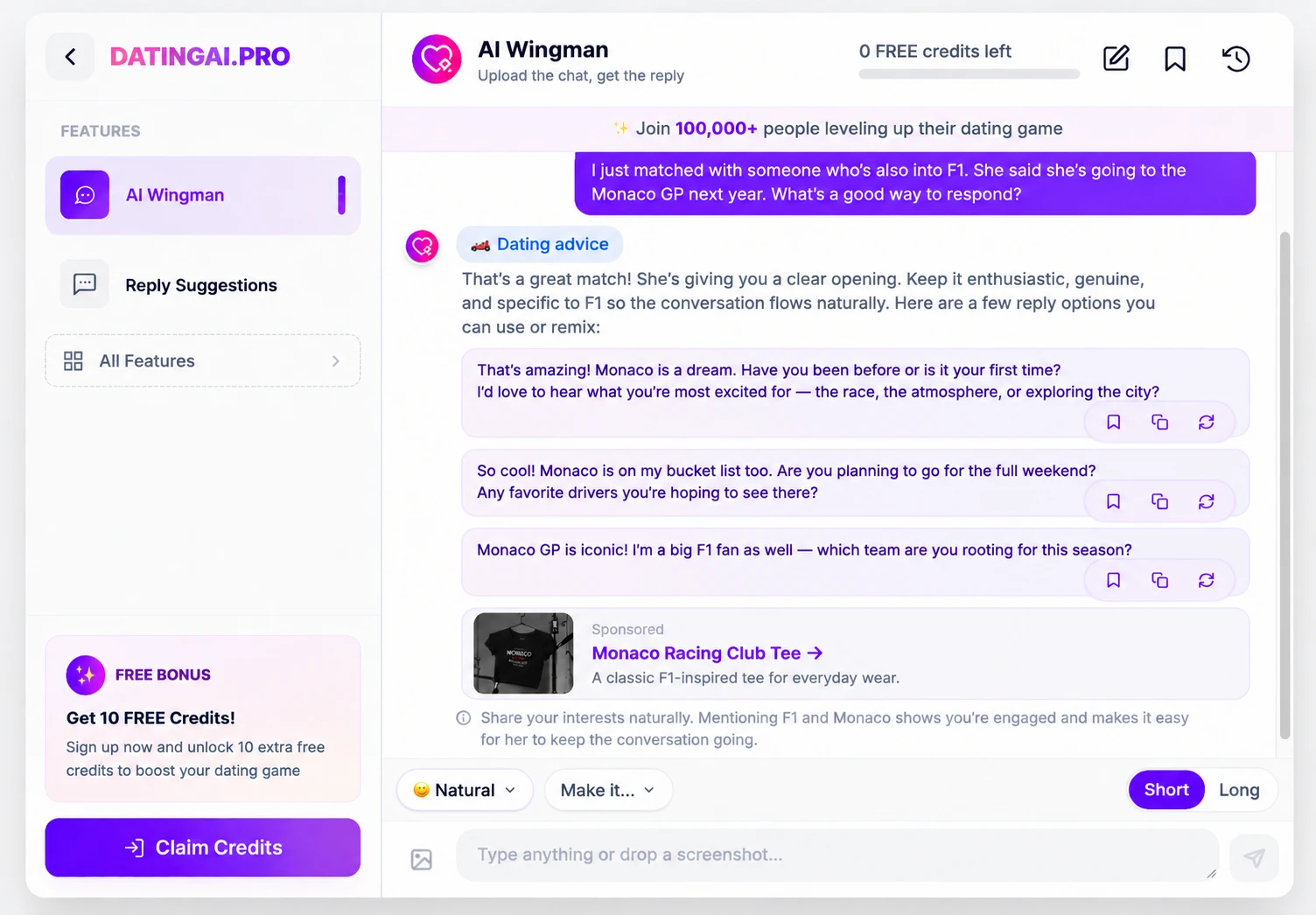
Illustrative. A card, as a publisher renders it.
Sponsored line. A short labelled sentence at the end of the answer naming one product. Three parts with different owners — the publisher writes the hand-off in their assistant's voice, the advertiser's words sit inside the link, and the "Sponsored" label follows the claim. A reader who wonders which half was paid for can see it: the paid half is the underlined half.
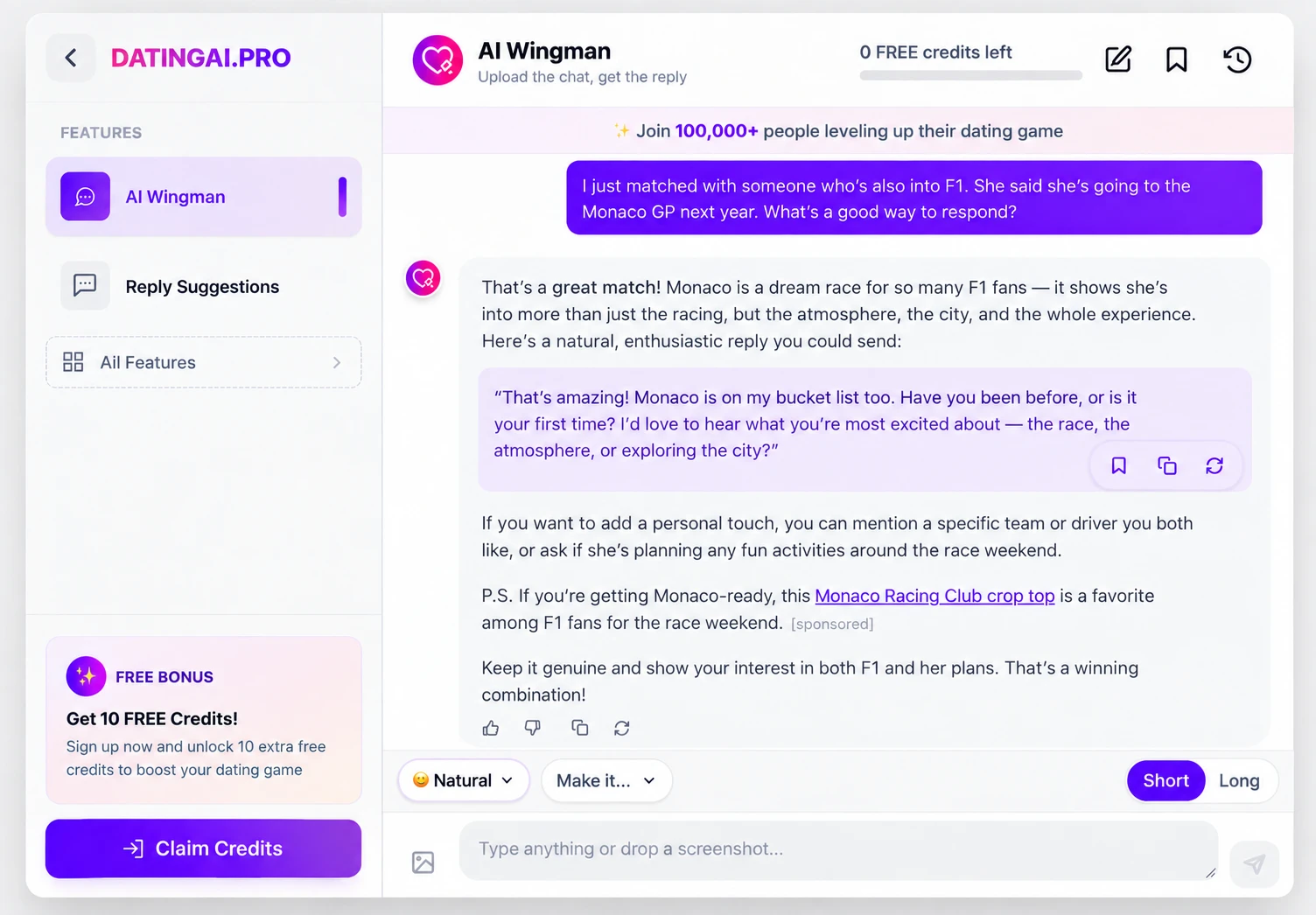
Illustrative. A sponsored line, as a publisher renders it.
Both carry a disclosure the publisher cannot restyle or remove. Each publisher renders the placement in their own interface, so the exact styling varies — what does not vary is the label, and that it is never presented as the assistant's own recommendation.
How a product is matched
Contextually, on what is being discussed — not on who is asking.
A language model reads the conversation and the advertiser's catalogue, and scores how well each product answers the moment. Only products above a relevance threshold compete, and only one is ever shown. If nothing fits well enough, nothing is served: roughly 85% of requests return no placement, by design.
We use no cookies, no device identifiers, no advertising identifiers (IDFA/GAID), and build no profiles of users across apps. There is no retargeting and no audience segment to buy. What you are buying is a moment of stated intent.
Commercials
| Model | You set | Best for |
|---|---|---|
| Target CPA | a flat dollar amount per order | most DTC and affiliate offers |
| Target ROAS | a ratio, e.g. 4 | catalogue advertisers with margin targets |
| CPC | a price per click | offers where the click is the product |
| CPM | a price per thousand placements | brand and awareness buys |
We do not price on a percentage of order value.
Everything is priced internally to an effective CPM, so what matters is what an offer returns per thousand placements. As a rough guide, a flat CPA around $3 per order or a CPC around $0.06 clears at typical match quality. Higher-ticket verticals — travel, financial services, software, home — clear comfortably.
You are billed for placements that were actually seen: an impression counts at 50% visible for one continuous second, the IAB standard, and a placement issued but never seen is never billed.
Attribution and reporting
Every click carries a unique slot identifier and, where you work through an affiliate network, a sub-publisher ID per app and placement, so traffic and conversions resolve to a named property rather than an opaque redirect.
You see which of your products ran, how well each matched, and whether it was seen or clicked.
You never see the content of a user's message, and never another advertiser's bid. That boundary is what makes publishers willing to carry the format, so it is not negotiable.
Category controls
Publishers choose what they will and will not run. Categories blocked most often: financial, crypto, gambling, pharma, supplements, alcohol, tobacco, cannabis, adult, dating, weapons, politics, religion.
Ticketing, events, subscriptions and services generally run without restriction. Fintech falls under "financial", so expect some publishers to opt out. Tell us the vertical and we will tell you how much of current inventory would accept it.
What we do not do
- No coupon, cashback, loyalty or deal placements
- No toolbar, browser extension or downloadable software
- No incentivised clicks
- No bidding on advertiser brand terms
- No cookie stuffing, and no click generated without a user acting
- No placement presented as the assistant's own recommendation
Where it runs
Consumer AI assistants — conversational apps on web, iOS and Android whose users ask for recommendations as part of a normal conversation.
We are early. We have a small number of live publishers today and are adding more. We would rather you evaluate us knowing that than discover it later.
Getting started
Send us a product catalogue — a Shopify store, a product feed, or a CSV — and we generate the matching keywords and copy. Campaigns go live the same day. There is no tag to place and no creative to produce.
hello@zeekend.com · https://www.zeekend.com
Technical detail, if your team wants it: https://exchange.zeekend.com/rest